Thursday, 11 April 2019

Better Solution to Debt Relief Debate

Pls take a look of the article again and again.Punlished in 2004 and culled by many respected journals outside Nigeria.Our debt was forgiven during OBJ regime now Nigeria debt is around $73bn .Can we pay ?   .  
 

Better Solution to Debt Relief Debate.

Asia Africa Intelligence Wire

| June 07, 2004 | Copyright
(From This Day (Nigeria) - AAGM)
Byline: Olufemi Aduwo
The debt crisis in many low-income countries has become a cause celebre for the media and international charitable organisations for good reason. Countries whose people have difficulty feeding themselves are finding it impossible to spur economic growth despite an infusion of fund from organisations such as the IMF and World Bank. They are barely able to pay the interest on their outstanding loans even using funds that could be better devoted to public health and education programme.
Take Cote d'Ivorie, for example, inhabitants of this small country have a declining life expectancy that is already about 15 years below the average for all developing countries, and its literacy rate is 30 per cent lower than the average. Its per capital gross national product increased by only $45 in the 1990s. Yet in 1995, World Bank figures indicated Cote d'Ivoire spent over eight times as much to service its debt (which was more than double its GNP) as it did in public health and education. Despite a joint IMF World Bank debt relief programme, Cote d'Ivorie's debt remained one-half times its GNP, and debt service payments consumed 14.4 percent of the country's GNP in 1997. Heavily indebted poor countries (HIPCS) like Cote d'Ivoire are deteriorating under this increasingly onerous burden of debt service.
The path from problem to solution is far from clear. For centuries, economists of every ideology (from Adam Smith and Karl Marx to Robert Barro and Joseph Stiglitz) have grappled with the question of what makes economies grow. One point they all agreed on is that when a country starts from a low level of economic development as influxes of investment can spark explosive growth if wisely utilised. This observation is the underlying justification for the billions of dollars developing countries have received in loans and grants from multilateral and bilateral sources. Unfortunately, providing money to these countries does not automatically translate into economic growth. Poor spending decisions, corruption and economic policies that undermine opportunities for growth frequently negate the benefits of loans and investment. Much more than these, are the intentions of the lenders, (creditors) which are one-sided benefiting.
The IMF historic role is to stabilise the world economy. World Bank provides loans for infrastructure at low interest rates and on a long-term basis. The IFC invests in private sector projects with low percentage require. The IMF itself provides the loan for balance of payments deficits. The nature of its loan is short term. It has some laid down conditionality. The conditionalities make access to the loan difficult. One of the conditions is the programme supervision by the IMF Staff of the recipient economy policies.
The external loan Nigeria obtained in 1978, was sourced from the money market in England. From 1980-1983 there was accumulation of foreign debt resulting from excessive issuance of import licences of goods and services in 1983, the letter or credit debts had risen to 12 billion US dollars. The figure was not verified but was accepted for redemption by the military government that came into power in the year. The credit was funded by each country's export guarantee organisation. These organisations refused to deal directly with the government of Nigeria but through the IMF, they insisted that IMF must approve the economic programme of Nigeria before they could reschedule Nigeria's debt. Nigeria's relationship with IMF is therefore based on the debt owed to the London and Paris clubs.
Nigeria borrowed for Aladja Steel in 1980 and NEPA or ECN in 1978, talking of the Paris Club in particular, what Nigeria borrowed was only $3.5 billion we did not pay on time and unfortunately be compounding interest plus unpaid principal, this figure rose to about $5.8 billion by 1985 and by 1995 20.9 billion. How did this happen? We borrowed at certain level of interest which was about six to seven percent, sometimes in the 1980s, interest rate rose to 12 per cent and it was being compounded and if you borrow at compounded interest of 12 per cent, it doubles every five year practically, so in 10 years you have got four times what you owed. This is how we find ourselves where we are. There is fundamental inequity in this sort of thing, if I borrowed $3.5 billion and invested it in good business, what business will yield $21 billion in 18 years, the principle of borrowing is that you used the money, you pay back and you have something.
The failure of traditional debt relief mechanisms to solve the debt problems of poor countries led the IMF and World Bank to create the HIPC initiative in 1996. The HIPC initiative offers to poor countries by rescheduling their debt when traditional debt relief measure proves in sufficient.
In order to be eligible for HIPC relief, a country must qualify for World Bank concessional assistance, have an "unsustainable" debt burden after exhausting all other debt relief options, and maintain a track record of adherence to IMF and World Bank conditions agreed to in return for loan referred to as "Conditionality". The HIPC initiative was expected to provide an 18 per cent reduction in debt service due but most countries did not pay their obligations in full. According to the IMF " in comparison to the debt service paid prior to HIPC debt relief, the reduction is about two per cent on average... and some countries are expected to experience an increase in debt service due even after HIPC assistance. This relief feel far short of the expectations of debt relief proponents. The development committee of the British House of Commons characterised this initiative as merely a "re-arrangement of account" which fails to provide a permanent solution to the HIPC debt problem.
According to Rev. Jesse Jackson, 'Debt burdens are the new economy's chains of slavery... remove the shackles from Africa, to guarantee life and opportunity to million of young children".
The goal should not be debt forgiveness, but maximising the ability of heavily indebted countries to develop economically and socially. Forgiving debt can facilitate this goal, but will not achieve it without other measures. The single greatest determinant of future economic growth is a free market not the amount that governments spend. Thus to be successful, debt forgiveness must be accompanied by means to encourage countries to adopt economic reform, that increase the economic development, and measures to prevent a return to unsustainable debt levels through poor investment of borrowed funds. The most dependable way to ensure that HIPC adopts economic and institutional reforms is to require them to forgo future official credit in return for debt forgiveness. This will (1) provide a clean slate to allow poor countries to start fresh. In fact, foreign assistance has done little more than add to the burden many developing countries face by increasing their overall debt. The past loans did not generate sufficient economic growth to supply countries with means to repay them. Forgiving these ill-conceived loans would allow poor countries to focus their resources on development rather than reinforcing past errors in judgement made by the creditors.
History indicates that foreign assistance has not helped nations develop. The study of London School of Economics concerning 92 developing nations 1997, found that "no relationship exists between the levels of aid and rates of growth in recipient countries". The argument that an aid cut-off would inevitably doom HIPCs to poverty is therefore a red herring. Access to private credit and investment will increase over time as countries adopt economic reforms experience economic growth and establish records of responsible debt management. There is ample evidence supporting this view. For instance, Hong Kong and Taiwan received little if any official assistance, yet they succeeded in outstripping large aid recipients in terms of economic growth by implementing economic and institutional reform.
Debt forgiveness without instituting economic reforms in each country and altering the lending policies and tendencies of multilaterial institutions is a shortsighted and ultimately futile gesture. Even IMF acknowledge that inability debt management and denominating their debt in dollars or other currencies while their own currencies devalue is not the best way forward. The best solution therefore is a combination of debt forgiveness and termination of future economic assistance. This approach would prevent the accumulation of excessive debt and ensure that the market (a better judge of creditworthy projects and policies than that official creditors) is the determining factor in lending decisions. HIPCs need a remedy, not a short-sighted plan that foists the problem off on future leaders.


Better solution to debt relief debate-This was my views widely published in Nigerian newspapers in 2004 and culled by World Bank publication a year la


Better Solution to Debt Relief Debate.

Asia Africa Intelligence Wire

| June 07, 2004 | Copyright
(From This Day (Nigeria) - AAGM)
Byline: Olufemi Aduwo
The debt crisis in many low-income countries has become a cause celebre for the media and international charitable organisations for good reason. Countries whose people have difficulty feeding themselves are finding it impossible to spur economic growth despite an infusion of fund from organisations such as the IMF and World Bank. They are barely able to pay the interest on their outstanding loans even using funds that could be better devoted to public health and education programme.
Take Cote d'Ivorie, for example, inhabitants of this small country have a declining life expectancy that is already about 15 years below the average for all developing countries, and its literacy rate is 30 per cent lower than the average. Its per capital gross national product increased by only $45 in the 1990s. Yet in 1995, World Bank figures indicated Cote d'Ivoire spent over eight times as much to service its debt (which was more than double its GNP) as it did in public health and education. Despite a joint IMF World Bank debt relief programme, Cote d'Ivorie's debt remained one-half times its GNP, and debt service payments consumed 14.4 percent of the country's GNP in 1997. Heavily indebted poor countries (HIPCS) like Cote d'Ivoire are deteriorating under this increasingly onerous burden of debt service.
The path from problem to solution is far from clear. For centuries, economists of every ideology (from Adam Smith and Karl Marx to Robert Barro and Joseph Stiglitz) have grappled with the question of what makes economies grow. One point they all agreed on is that when a country starts from a low level of economic development as influxes of investment can spark explosive growth if wisely utilised. This observation is the underlying justification for the billions of dollars developing countries have received in loans and grants from multilateral and bilateral sources. Unfortunately, providing money to these countries does not automatically translate into economic growth. Poor spending decisions, corruption and economic policies that undermine opportunities for growth frequently negate the benefits of loans and investment. Much more than these, are the intentions of the lenders, (creditors) which are one-sided benefiting.
The IMF historic role is to stabilise the world economy. World Bank provides loans for infrastructure at low interest rates and on a long-term basis. The IFC invests in private sector projects with low percentage require. The IMF itself provides the loan for balance of payments deficits. The nature of its loan is short term. It has some laid down conditionality. The conditionalities make access to the loan difficult. One of the conditions is the programme supervision by the IMF Staff of the recipient economy policies.
The external loan Nigeria obtained in 1978, was sourced from the money market in England. From 1980-1983 there was accumulation of foreign debt resulting from excessive issuance of import licences of goods and services in 1983, the letter or credit debts had risen to 12 billion US dollars. The figure was not verified but was accepted for redemption by the military government that came into power in the year. The credit was funded by each country's export guarantee organisation. These organisations refused to deal directly with the government of Nigeria but through the IMF, they insisted that IMF must approve the economic programme of Nigeria before they could reschedule Nigeria's debt. Nigeria's relationship with IMF is therefore based on the debt owed to the London and Paris clubs.
Nigeria borrowed for Aladja Steel in 1980 and NEPA or ECN in 1978, talking of the Paris Club in particular, what Nigeria borrowed was only $3.5 billion we did not pay on time and unfortunately be compounding interest plus unpaid principal, this figure rose to about $5.8 billion by 1985 and by 1995 20.9 billion. How did this happen? We borrowed at certain level of interest which was about six to seven percent, sometimes in the 1980s, interest rate rose to 12 per cent and it was being compounded and if you borrow at compounded interest of 12 per cent, it doubles every five year practically, so in 10 years you have got four times what you owed. This is how we find ourselves where we are. There is fundamental inequity in this sort of thing, if I borrowed $3.5 billion and invested it in good business, what business will yield $21 billion in 18 years, the principle of borrowing is that you used the money, you pay back and you have something.
The failure of traditional debt relief mechanisms to solve the debt problems of poor countries led the IMF and World Bank to create the HIPC initiative in 1996. The HIPC initiative offers to poor countries by rescheduling their debt when traditional debt relief measure proves in sufficient.
In order to be eligible for HIPC relief, a country must qualify for World Bank concessional assistance, have an "unsustainable" debt burden after exhausting all other debt relief options, and maintain a track record of adherence to IMF and World Bank conditions agreed to in return for loan referred to as "Conditionality". The HIPC initiative was expected to provide an 18 per cent reduction in debt service due but most countries did not pay their obligations in full. According to the IMF " in comparison to the debt service paid prior to HIPC debt relief, the reduction is about two per cent on average... and some countries are expected to experience an increase in debt service due even after HIPC assistance. This relief feel far short of the expectations of debt relief proponents. The development committee of the British House of Commons characterised this initiative as merely a "re-arrangement of account" which fails to provide a permanent solution to the HIPC debt problem.
According to Rev. Jesse Jackson, 'Debt burdens are the new economy's chains of slavery... remove the shackles from Africa, to guarantee life and opportunity to million of young children".
The goal should not be debt forgiveness, but maximising the ability of heavily indebted countries to develop economically and socially. Forgiving debt can facilitate this goal, but will not achieve it without other measures. The single greatest determinant of future economic growth is a free market not the amount that governments spend. Thus to be successful, debt forgiveness must be accompanied by means to encourage countries to adopt economic reform, that increase the economic development, and measures to prevent a return to unsustainable debt levels through poor investment of borrowed funds. The most dependable way to ensure that HIPC adopts economic and institutional reforms is to require them to forgo future official credit in return for debt forgiveness. This will (1) provide a clean slate to allow poor countries to start fresh. In fact, foreign assistance has done little more than add to the burden many developing countries face by increasing their overall debt. The past loans did not generate sufficient economic growth to supply countries with means to repay them. Forgiving these ill-conceived loans would allow poor countries to focus their resources on development rather than reinforcing past errors in judgement made by the creditors.
History indicates that foreign assistance has not helped nations develop. The study of London School of Economics concerning 92 developing nations 1997, found that "no relationship exists between the levels of aid and rates of growth in recipient countries". The argument that an aid cut-off would inevitably doom HIPCs to poverty is therefore a red herring. Access to private credit and investment will increase over time as countries adopt economic reforms experience economic growth and establish records of responsible debt management. There is ample evidence supporting this view. For instance, Hong Kong and Taiwan received little if any official assistance, yet they succeeded in outstripping large aid recipients in terms of economic growth by implementing economic and institutional reform.
Debt forgiveness without instituting economic reforms in each country and altering the lending policies and tendencies of multilaterial institutions is a shortsighted and ultimately futile gesture. Even IMF acknowledge that inability debt management and denominating their debt in dollars or other currencies while their own currencies devalue is not the best way forward. The best solution therefore is a combination of debt forgiveness and termination of future economic assistance. This approach would prevent the accumulation of excessive debt and ensure that the market (a better judge of creditworthy projects and policies than that official creditors) is the determining factor in lending decisions. HIPCs need a remedy, not a short-sighted plan that foists the problem off on future leaders.
Distributed by AllAfrica Global Media. (allafrica.com)
Searching...
 

Monday, 8 April 2019

COUNTRIES URGE RECAPITALIZATION OF THE CLIMATE INVESTMENT FUNDS


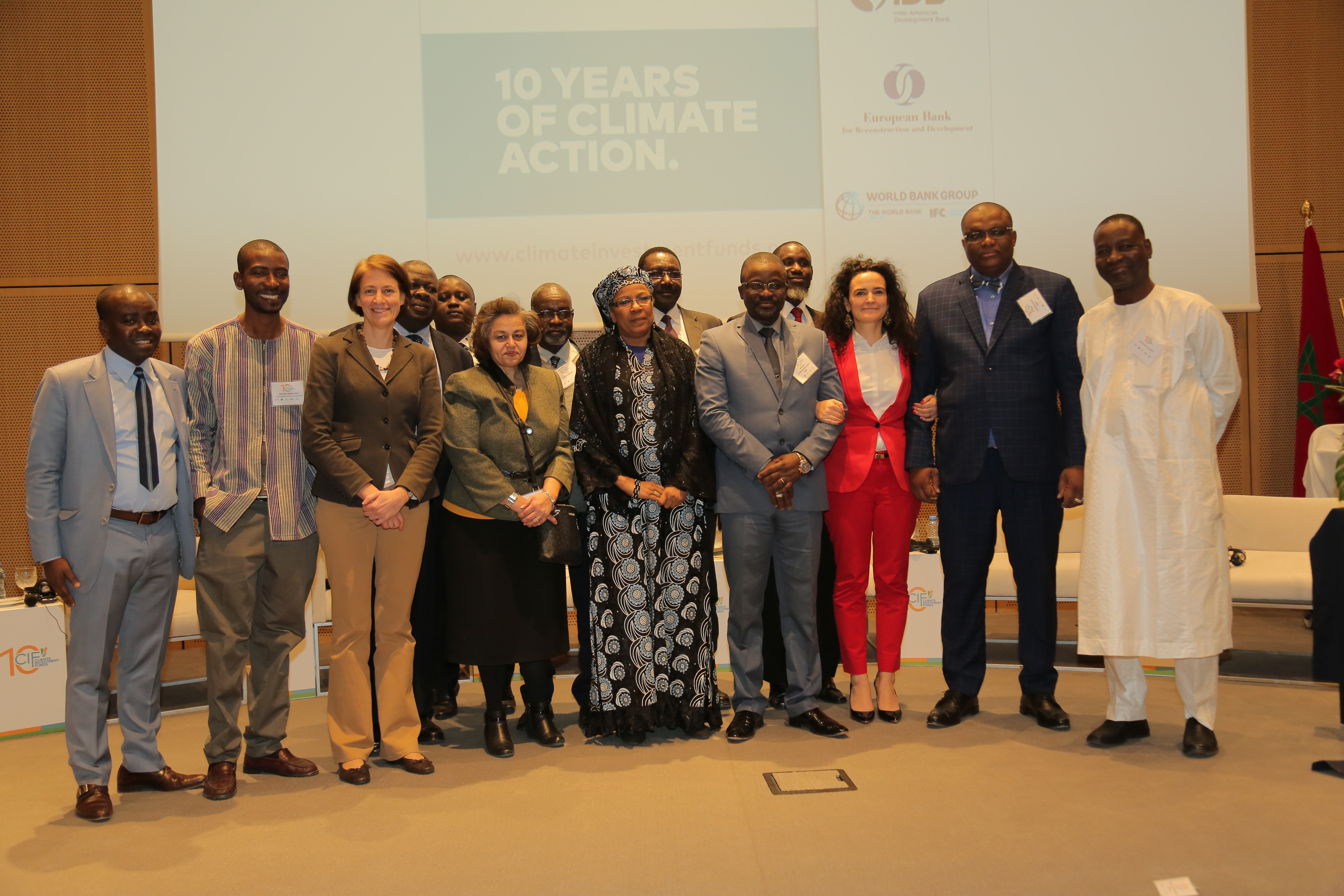
On the eve of the 2019 Spring Meetings of the World Bank Group and the International Monetary Fund, more than 30 developing countries called on the international community to recapitalize the Climate Investment Funds (CIF) in response to worsening consequences of climate change and sweeping finance gaps for low-carbon development.

In a joint statement, ministers representing nations on the frontlines of climate change sent the clearest signal yet that CIF is, and should remain, a central multilateral institution in the global climate finance architecture. Addressing mass migration, increased poverty rates, and other climate impacts, they declared, requires "significant investment" from CIF and its partners in areas spanning resilience, energy transition and access, land use management, and sustainable cities.

Mobilizing finance for climate action is a core development challenge and a multitrillion-dollar economic opportunity. Closing the expansive gap in climate finance is vital to supporting developing countries in meeting their sustainable development objectives, avoiding global climate catastrophe, and seizing the rewards of a new climate economy. It is also a priority area of UN Secretary-General António Guterres' Climate Summit in September of this year.

"Now is the time—not tomorrow, not next week—to direct all our energy, all our ingenuity, and all our resources toward reining in this crisis. With their statement today, developing countries acknowledged unequivocally that CIF is an essential means to this end," said CIF Head Mafalda Duarte.

Honduras, Niger, Vietnam, Tajikistan, and other signatories praised CIF's tried-and-tested approach to climate finance. They stressed the need to harness its comparative advantages and those of complementary multilateral climate funds, including the Green Climate Fund, to drive low-carbon and resilient development where it is needed most: in low and middle-income countries.

Now marking over a decade of climate action, CIF financing is unlocking over $55 billion in climate change-related investments across 72 countries. These efforts have realized hundreds of transformational programs and projects that would have been impossible without CIF's below-market rates and patient, risk-absorbing capital. Worldwide, CIF-funded initiatives are supporting 26.5 gigawatts in clean power capacity, improved energy access for 8.5 million people and over 300,000 businesses, strengthened climate resilience for 45 million people and 44,000 businesses, and 36 million hectares of more sustainable forests.

These efforts range from developing new financial tools for scaling energy efficiency in Turkey, to ensuring climate-resilient livelihoods in Niger, to building the world's largest concentrated solar power plant in Morocco. CIF partnerships are helping clean energy industries in Chile, India, Nepal, and Ghana, creating jobs and hope for enterprising young people across emerging economies. In addition, the lessons generated from more than 300 CIF-supported ventures are continually setting the standard for stakeholder engagement, governance, transparency, and accountability for similar financing institutions in the public and private sectors.

The climate decisions we make now will have lasting implications for our generation and those to come. We face a closing window of opportunity to enact the unprecedented transitions in land use, industry, energy, transport, and urban development needed to build a more resilient world.

With adequate financing, CIF can continue pushing the frontier of climate finance around the world, serving as a partner of choice for driving change in markets, technologies, institutions, and behaviors. CIF stands ready to continue contributing to a cleaner, more prosperous, and more sustainable future for all.
 

About CIF
Marking more than ten years of climate action, the $8.3 billion Climate Investment Funds is the largest multilateral climate financing instrument in the world. CIF provides developing countries financing for climate-resilient and low-carbon development. These grants, concessional loans, risk mitigation instruments, and equity leverage significant financing from the private sector, multilateral development banks (MDBs), and other sources. Five MDBs—the African Development Bank (AfDB), Asian Development Bank (ADB), European Bank for Reconstruction and Development (EBRD), Inter-American Development Bank (IDB), and World Bank Group (WBG)—implement CIF-funded projects and programs.

Sunday, 7 April 2019

PDP Accuses Amaechi, Malami of Plots To Cause Constitutional Crisis in Rivers State


April 7, 2019

Press Conference

PDP Accuses Amaechi, Malami of Plots To Cause Constitutional Crisis in Rivers State 

Gentlemen of the press, we have called you up this afternoon to alert Nigerians of a fresh plot by desperate leaders of the All Progressives Congress (APC), working with the Minister of Justice and Attorney General of the Federation (AGF), Abubakar Malami SAN, to cause constitutional crisis in Rivers State.

The PDP has been informed of how these desperate APC figures and their agents have been mounting pressure on the Acting Chief Justice of Nigeria (CJN), Justice Tanko Mohammed, to reverse the February 12, 2019 final judgment of the Supreme Court, which upheld the verdict of the trial court that lawfully excluded the APC from participating in the National Assembly, Governorship and State Assembly Elections in Rivers State, having nullified the party's flawed primaries in the state. 

Nigerians can recall that in nullifying the APC primaries and barring it from fielding any candidates in Rivers State for the 2019 general elections, the High Court held, and rightly too, that APCs' primaries in the state were invalid and cannot be considered. 

Acting upon the final judgment of the Supreme Court, the Independent National Electoral Commission (INEC), on February 23, 2019 held the Presidential/National Assembly elections and on March 9, 2019 conducted the governorship and State House of Assembly elections in Rivers state, in which the APC, having been lawfully excluded, did not participate. 

Nigerians can also recall how the APC, having been frustrated by its lawful exclusion, used compromised security agents to violently disrupt the smooth conduct of elections in Rivers State.

In the course of the elections, the APC however adopted the governorship candidate of the African Action Congress (AAC), bankrolled his election and made compromised security agents and thugs available to him, with the view to using them to muscle votes.

In spite of these conspiracies by the APC, the will of the people of Rivers state prevailed, as they braved the odds, resisted all machinations and voted overwhelmingly for the PDP and all its candidates.

The spontaneous jubilation in Rivers State and across the country, in addition to the general outpouring of goodwill to Governor Wike and other candidates of the PDP on their victory, clearly demonstrates the PDP popularity and acceptance not only by the people of Rivers, but also by lovers of democracy all over world.

However, not done with the desperation to cause confusion and crisis in Rivers state, the leader of the APC in the state; Minister of Transport, Rotimi Amaechi, has engaged in fresh conspiracies to subvert the will of the people as expressed at the polls.

The PDP has information of how Rotimi Amaechi has been going around in Rivers State, giving assurances that he has the ears of the Supreme Court under the leadership of Acting CJN, Justice Tanko Mohammed, and that the Supreme Court will reverse its final judgment on APC Primaries and create the way for fresh elections in Rivers State, in which the APC will be allowed to participate. 

Rotimi Amaechi goes about boasting that the apex court in the land, the Supreme Court, will reverse itself and declare for fresh conduct of all the elections in Rivers State.

This is completely reprehensible and unthinkable in our democratic process.

If this is allowed to occur, it will also amount to the highest travesty of justice, apart from being a direct abuse of court process. The Supreme Court is the highest temple of justice in our country and as such must protect itself from all forms of manipulative tendencies of the APC.

The jubilation across the country that trailed its February 12 final judgment is a testament of justice and a reinforcement of the confidence Nigerians have in the Supreme Court, which must not be destroyed by the APC. 

The PDP therefore urges the Acting CJN not to allow his office to be used by desperate power mongers in the APC to cause anarchy and perpetrate more violence in Rivers state.

The people of Rivers state have experienced so much crisis, bloodletting, harassment and intimidations from the APC in its desperation to forcefully take over the state. 

The people have spoken loudly on their choice of PDP and all its candidates. They should be allowed to move ahead with their leaders and no institution of government should lend itself as an instrument in the hands of oppressive forces seeking to undermine our democracy and subjugate our citizenry.

Signed:

Kola Ologbondiyan
National Publicity Secretary

Thursday, 4 April 2019

No More Subsidy


The International Monetary Fund (IMF) has reiterated its call for the Federal Government to end fuel subsidies, saying that this, coupled with efforts to strengthen social safety nets, "would help reduce the poverty gap and free up additional fiscal space."


In a press release issued yesterday on the conclusion of the IMF Article IV Consultation with Nigeria, the Fund also stated that it was imperative for the Federal Government to secure oil revenues through, "reforms of state owned enterprises and measures to improve the governance of the oil sector."


While noting that the Nigerian economy is recover ing, the Fund, however, urged the government to intensify its reform efforts, saying that: "Under current policies, the outlook remains muted."


The IMF stated: "Executive Directors welcomed Nigeria's ongoing economic recovery, accompanied by reduced inflation and strengthened reserve buffers. They noted, however, that the medium-term outlook remains muted, with risks tilted to the downside. In addition, long standing structural and policy challenges need to be tackled more decisively to reduce vulnerabilities, raise per capitagrowth, and bring down poverty. Directors, therefore, urged the authorities to redouble their reform efforts, and supported their intention to accelerateimplementation of their Economic Recovery and Growth Plan.


Continuing, it said: "Bold reform efforts, following the election cycle, could boost confidence and investments, especially given relatively conservative baseline projections. On the downside, additional delays in reform implementation, a persistent fall in oil prices, reduced oil production, increased security tensions, or tighter global financial market conditions could undermine growth, provoke a market sell-off, and put additional pressure on reserves and/or theexchange rate."


According to the statement, the IMF also said that despite the decline in Non-Performing Loans (NPLs) and improved prudential banking ratios, "undercapitalized banks continue to weigh on financial sector performance," adding that the authorities should create a credible timeline to recapitalise weak banks in the country and also for phasing out the Asset ManagementCorporation of Nigeria(AMCON).


As the statement puts it: "Directors welcomed the decline in non-performing loans and the improved prudential banking ratios, but noted that restructured loans and undercapitalized banks continue to weigh on financial sector performance.


"They suggested strengthening capital buffers and risk-based supervision, conducting an asset quality review, avoiding regulatory forbearance, and revamping the banking resolution framework. Directors also recommended establishing a credible time bound recapitalization plan for weak banks and a timeline for phasing out the state backed asset management company, AMCON."


Furthermore, the IMF Directors, according to the statement, welcomed the Federal Government's tax reform plan to increase non-oil revenue, including through tax policy and administration measures.


"They stressed the importance of strengthening domestic revenue mobilization, including through additional excises, a comprehensive VAT reform,   and elimination of tax incentives.
"Directors highlighted the importance of shifting theexpenditure mix toward priority areas. They welcomed, in thiscontext, the significant increase in public investment, but underlined the need for greater investment efficiency," the statement said.
Similarly, the IMF Directors expressed support for restrictive monetary policy, saying it is appropriate for the Nigerian economy at this time.

"With inflation still above the Central Bank's target, directors generally considered that a tight monetary policy stance is appropriate," they stated.
They urged the Central Bank of Nigeria (CBN) to enhance transparency and communication and to improve the monetary policy framework, including using more of traditional methods such as raising the Monetary Policy Rate (MPR) or Cash ReserveRequirements (CRR).

They, however, advised the CBN to end its direct intervention in the economy and focus on its price stability mandate.
It would be recalled that during her visit to Nigeria in 2016, the Managing Director of the IMF, Christine Lagarde, had asked the Federal Government to take very tough economic decisions, including removal of fuel subsidy and increasing VAT.


Stressing the need to remove fuel subsidy, Lagarde said at the time that: "The move by the government to remove the fuel subsidy is good. Those people who need the subsidy can receive cash transfer. Fuel subsidies are hard to defend. Subsidies are no longer good. But I hear that it will hurt the poor. Forty per cent of fuel subsidies in rich countries go to rich families. The people do not really need the subsidy. Look at the number of people who stay at stations trying to buy fuel

Sunday, 31 March 2019

On Gov Fayemi's Mischief on Restructuring


The attention of Afenifere has been drawn to the statement credited to Governor Kayode Fayemi at the weekend that restructuring idea will remain  a mirage except proponents of it in Yorubaland reach out to other regions .
We would ordinarily  have ignored such unkind cut if it had come from any ignorant fellow. 
But His Excellency cannot be counted among the ignorant and could only have been mischievous in making such revisionism. 
For the generations under 60 in Yorubaland,Chief Obafemi Awolowo was criss -crossing the length and breadth of Nigeria before they were born on the issue of federalism that would benefit the whole country and not only the Yoruba .
Chief Awolowo's extensive works among the minorities of the South and the North to the point of placing a lot of their leaders on same level of allowances with Ministers in Western Region was part of his efforts to galvanize national consensus around federalism. 
Since the exit of the great Leader,his disciples have never neglected the path of reaching out to all sections of the country at every point in time to build national consensus .
At the 2014 National Conference for instance,Yoruba delegates worked nights and days with Leaders across Nigeria to build consensus which led to over three  hundred resolutions that would have moved Nigeria forward if implemented, without the use of ballot once .
In the last four years that the APC government ,which Fayemi is part of,has made the idea of restructuring a "mirage " in spite of deceiving Nigerians with Federalism on their manifesto in 2015,proponents of restructuring in the South West have worked with other regions in the Southern and Middle Belt Leaders Forum and the Nigerian Leaders and Elders Forum which  included Northern Elders Forum to promote the idea of federalism. 
The map of the last presidential elections with all the manipulations still showed the result of what have been achieved in this regard. 
Instead of shifting the blame  on  proponents of restructuring ,a governor with testicular fortitude should have found the courage to reach to the only "region" stonewalling the restructuring of Nigeria -the Buhari presidency,in spite of the El-Rufai Committee report which now appears a mere attempt to hoodwink tgr unwary. 
If some politicians from the region are enslaved to an anti-progress leadership and have lost their voices for self -preservation,they should be careful in insulting leaders from their region to impress their masters .

Yinka Odumakin 
National Publicity Secretary.

Saturday, 30 March 2019

Innoson to take over GTBank? Here’s what you should Know.

Innoson to take over GTBank? Here's what you should Know.

Innoson Vehicles Manufacturing, a Nigerian automobile company, has claimed that it has obtained a nod from court to take over Guaranty Trust Bank, one of the largest deposit money banks in the country.

In a statement first shared on its Twitter page on Friday, Innoson said the Supreme Court upheld the ruling earlier given at the federal high court in Ibadan.

Innoson's statement

The statement released by Cornel Osigwe, Innoson's head of corporate communications read: "The Chairman of Innoson Group, Chief Dr Innocent Chukwuma, OFR has through a Writ of FiFa taken over Guaranty Trust Bank PLC for and on behalf of Innoson Nigeria Ltd as a result of the Bank's indebtedness to Innoson Nigeria Ltd. In a landmark decision on February 27th 2019, the Supreme Court of Nigeria dismissed GTB's appeal – SC. 694/2014- against the judgment of Court of Appeal, Ibadan Division.

"The Court of Appeal, Ibadan division had in its decision of 6th February 2014 dismissed GTB's appeal against the Federal High Court, Ibadan Division.

"Thus, the Court of Appeal affirmed the judgment of the Federal High Court, Ibadan Division which ordered GTB by way of Garnishee order absolute – to pay N2.4 Billion to Innoson with a 22% interest, per annum, on the judgment sum until the final liquidation of the judgment debt.

"Rather than obey the judgment of the Court of Appeal, GTB approached the Supreme Court to challenge the Court of Appeal's decision.

"However in an ruling delivered by Honourable Olabode Rhodes-Vivour JSC on Wednesday, February 27th2019, the Lord Justices of the Supreme Court (JSC) dismissed GTB's appeal and thus affirmed the concurrent judgment of both the Court of Appeal and the Federal High Court, Ibadan Division which ordered GTB by way of Garnishee order absolute – to pay N2.4 Billion to Innoson with a 22% interest, per annum, on the judgment until the final liquidation of the judgment.

"The Judgment debt of N2.4B has an accrued interest as at today of about N6,717,909,849.96 which results to about N8.8 Billion.

"Based on the Supreme Court's decision of 27th February 2019 the counsel to Innoson, Prof McCarthy Mbadugha ESQ, had approached the Federal High Court, Awka Division for leave to enforce the judgment having obtained Certificates of Judgment from the Ibadan Division of the Federal High Court.

"Having obtained the requisite leave, the Federal High Court issued the necessary process for levying execution – the Writ of Fifa."

GT Bank: Judgement issued against Custom's account, not us

In response to the judgement, Erhi Obebeduo, company secretary of the bank, said: "The attention of Guaranty Trust Bank Plc ("the Bank"} has been drawn to statements circulating in the news and social media in respect of a purported enforcement of a Judgment of the Federal High Court, Ibadan, Oyo State. at one of its branches in Anambra State.

"The Bank as a law-abiding corporate citizen is taking all necessary legal steps to address this situation and ensure that no illegal or fraudulent execution is carried out.

"It is important to state that the Judgment allegedly in issue is in respect of Garnishee Proceedings against the account of the Nigerian Customs Service Board domiciled with the Bank and not against the Bank as an entity.

"The Bank remains committed to providing best-in-class customer experience to all its valued Customers."

What is a Writ of FiFa?

A Writ of Fieri Facias is a legal instrument issued after a judgement and it is used to seize the assets of a judgment debtor till the debt in question is settled.

Usually, only the debtor's property that can satisfy the judgment is held.

In the case of Guaranty Trust Bank, which has assets in trillions, only a portion of assets identified by the court would be held.

Will my deposits be affected?

Your deposits cannot be affected as they have been insured by the Nigeria Deposit Insurance Company (NDIC) and every bank has a deposit with the Central Bank of Nigeria (CBN), which it can get in desperate times to stay afloat.

Assets of the bank like buildings and its stake in other entities are on the line here and the shareholders of the bank will be ones to be affected by this if and when the payment is made.

Osinbajo: How 50 UK police officers assisted ACN to recover 4 states from PDP in 2007

Osinbajo: How 50 UK police officers assisted ACN to recover 4 states from PDP in 2007


Vice-President Yemi Osinbajo says a team of 63 fingerprint experts, including 50 from the UK police, worked to help the then Action Congress of Nigeria (ACN) reclaim some states that were allegedly rigged by the Peoples Democratic Party (PDP) in 2007.

He listed the states as Osun, Ekiti, Ondo and Edo. Only Ondo that was not under the control of ACN then but Bola Tinubu, then the leader of ACN, had used his influence in assisting Olusegun Mimiko, a former governor of Ondo, to take the state from the PDP.

Mimiko belonged to the Labour party at the time. He later defected to the PDP.

Speaking at the 11th colloquium of Bola Tinubu, a national leader of the All Progressives Congress (APC), the vice-president said Tinubu told him that they needed to prove that there was case of over voting.

"In 2007, when our party, then ACN, was rigged out of elections in Osun, Ekiti, Ondo and in Edo state. He invited me to his residence at bourdillion and he said the only way we can possibly reclaim the states that was taken away from us is going through the courts.
He said the only is by proving that there was multiple voting. Meaning that a few people singlehandedly thumb-printed ballot papers, dumped them into ballot boxes and they were counted in favour of the opposition, the PDP," he said.

"He said the only we can do this – he said 'I don't know how you will do this' – but some how proving that their is evidence that this is what happened.

"I said 'Asiwaju, nobody has ever proven that in an electoral case' and I said what is even more is that there are over a million ballot papers, how can we prove it? He said that was his view and I should look for a way of sorting this out.

"So I went to to the UK and met with possibly the most experienced [expert] in the entire UK. When I told the enormity of the problem, he laughed and almost fell off his chair. He said in all his experience as a finger print expert he has not done up to 4000 prints and you are now saying I should come and do 1.3 million finger prints. That was a Thursday and he called me back on Monday and he said let's talk again about this. And we did, and somehow we found a away.

"We used a bit of technology. Most importantly we were able to get finger print experts. In the end, we hired 63 finger print experts, 50 of them were from the UK police. Asiwaju had to persuade the authorities to release them all together 63 police men – they were working for almost six months.

"We were able to put together a strong forensic case that showed that that the places that were defeated it was on account of multiple voting. To cut the long long story short, one by one, we were able to get the states taken from us

Tripod Consequences Of Brexit

Tripod Consequences Of Brexit

A hard Brexit without a trade agreement would eliminate Britain's tariff-free trade status with the other EU members. Tariffs would raise the cost of exports .That would hurt exporters as their goods became higher-priced in Europe. Even with a trade agreement, a hard  Brexit could be disastrous  for The City, the U.K.'s financial center. Companies would no longer use it as an English-speaking entry into the EU economy. The City of London  reported that 5,000 jobs could be lost. That could lead to a real estate collapse. There are many new office buildings under construction that would sit empty. Housing prices have already started to fall.


The United Kingdom would lose the advantages of EU's state-of-the-art technologies. The EU grants these to its members in environmental protection, research and development, and energy. 

Also, U.K. companies could lose the ability to bid on public contracts in any EU country. These are open to bidders from any member country. The most significant loss to London is in services, especially banking. Practitioners would lose the ability to operate in all member countries. A hard Brexit could raise the cost of airfares, the internet, and even phone services.

A hard Brexit would hurt Britain's younger workers. Germany  is projected to have a labor shortage of 2 million workers by 2030. Those jobs will no longer be as readily available to the U.K.'s workers after Brexit. London is already losing many nurses and other health care professionals. In the year following the referendum, almost 10,000 quit. The number of nurses from Europe registering to practice in Britain has dropped  by almost 90 percent.

Under a hard Brexit, the U.K could lose Scotland. It could join the EU on its own, as some countries within the kingdom of Denmark have. It may even have a referendum to leave the United Kingdom. 


The most likely scenario is that nothing happens before the April 2019 deadline. In that case, the U.K. would no longer be a member of the EU, and it would have no trade agreement. It would have all of the disadvantages of a hard Brexit and there would be no trade agreement.

Britain would have to pay its outstanding EU bills of $51 billion. It would have to find a way to guarantee rights to EU citizens living in the U.K.Custom delays  could create  food shortages. The U.K. is vulnerable because an extreme heat wave and summer  drought caused by global warming  have already reduced food output.Tariffs would be reimposed. They are as high as 74 percent for tobacco, 22 percent for orange juice, and 10 percent for automobiles. That would hurt exporters. Some of that pain would be offset by a weaker pound.

Tariffs would increase prices of  imports into the U.K. One -third of its food  comes from the EU. Higher import prices would create inflation  and lower the standard of living for U.K. residents.Northern Ireland  would remain with the United Kingdom. The country of Ireland, with which it shares a border, would stay a part of the EU.


A no-deal Brexit would create a customs border between the two.

This could  reignite the troubles. It was a 30-year conflict in Northern Ireland between mainly Catholic Irish nationalists and pro-British Protestants. In 1998, it ended with the promise of no border between Northern Ireland and Ireland. It would also force  35,000 commuters to go through customs on their way to and from work. Some of those in Northern Ireland who want to remain in the EU could call for a referendum to rejoin the country of Ireland.Prime Minister May  has rejected  the EU proposal that there be a customs border between Northern Ireland and Great Britain. The United Kingdom is Ireland's second-biggest export destination. But under a no-deal Brexit, she would have no choice.


The Brexit vote has strengthened anti-immigration parties throughout Europe. As a result, Germany's Chancellor Merkel has already announced she will not run for re-election. If these parties gain enough ground in France and Germany, they could force an anti-EU vote. If either of those countries left, the EU would lose its most robust economies and would dissolve.On the other hand, new polls show that many in Europe feel a new cohesiveness. The U.K. often voted against many EU policies that other members supported. IMF Managing  Director Christine Lagarde said, "The years are over when Europe cannot follow a course because the British will object." She added, "Now the British are going, Europe can find a new elan." 


The day after the Brexit vote, the Dow fell by 610.32 points.Currency markets were also in turmoil. The  euro fell 2 percent to $1.11. The pound fell. Both increased the  value of the dollar. That strength is not good for U.S. stock markets . It makes American shares more expensive for foreign investors. As a result, gold prices  rose 6 percent from $1,255 to $1,330. 

A weak pound also makes U.S. exports to the U.K. more expensive. It affects the U.S farming and manufacturing sectors. The U.K. is America's fourth-largest export market.U.S. companies invested $588 billion and employed more than a million people. These companies use it as the gateway to free trade with the 28 EU nations. Many have opened subsidiaries elsewhere in Europe to protect against a hard Brexit or no deal.Britain's investment in the United States is at the same level. That could  impact up to 2 million U.S./British jobs. It's unknown exactly how many are held by U.S. citizens. The uncertainty over their future will dampen growth. 


Brexit is a vote against globalization. It takes the United Kingdom off the main stage of the financial world. It creates uncertainty throughout the U.K. as The City seeks to keep its international clients. U.S. stability means London's loss could be New York's gain.  


In June 2016, The former Prime Minister David Cameron called  for the referendum. He wanted to silence pro-Brexit opponents within his Conservative party. He thought the referendum would resolve the issue in his favour. Unfortunately for him, the anti-immigration and anti-EU arguments won.They felt that EU membership was changing their national identity. They didn't like the budgetary constraints and  regulations  the EU imposed. They didn't see how the free movement of capital and trade with the EU benefited them. Younger voters and those in London,  Scotland ,and Northern lreland wanted to stay in the EU. They were outnumbered by older voters who turned out in droves.

Olufemi Aduwo 

Permanent Representative of Centre for Convention on Democratic lntegrity( CCDI) to United Nations.

Note: The only Nigerian accredited by U.K Electoral commission as observer  for Brexit referendum in 2016.

Friday, 29 March 2019

Innoson Motors secures court order against GTBank over controversial debt

Innoson Motors secures court order against GTBank over controversial debt

Innoson
Dr. Innocent Ifediaso Chukwuma, Chairman of Innoson Vehicle Manufacturing (IVM) Innoson Group.

A Nigerian car manufacturing company claims it has obtained a court order that allows it to take control of one of the country's largest banks.

Innoson Nigeria Limited on Friday said it obtained a writ of Fifa from the Federal High Court in Awka, Anambra State, against Guaranty Trust Bank (GTB) to implement the judgment given by Nigerian courts over the lingering crisis between it and the bank.

A copy of the Awka court order was sent to Voxipopulid

The company in a statement signed by its spokesperson, Cornel Osigwe, said a judgement given by the Federal High Court in Ibadan was upheld by the Supreme Court of Nigeria.

A Writ of Fieri Facias (or Writ of Fi Fa) is a document issued by the court for the purpose of effecting court judgment on a debtor's property. It is also the legal instrument by which the assets of a judgment debtor may be seized.

Innoson and GTB have for long been locked in legal tussles following disagreements over a business deal.

On Friday, Innoson claimed its Chairman, Innocent Chukwuma, has been mandated to "take over" GTB after the supreme court dismissed GTB's appeal against the judgement of the appeal court in Ibadan.

"The Chairman of Innoson Group, Chief Dr. Innocent Chukwuma, OFR has through a Writ of FiFa taken over Guaranty Trust Bank PLC for and on behalf of Innoson Nigeria Ltd as a result of the bank's indebtedness to Innoson Nigeria Ltd," the statement said.

"In a landmark decision on February 27th 2019, the Supreme Court of Nigeria dismissed GTB's appeal — SC. 694/2014 — against the judgment of Court of Appeal, Ibadan Division.

"The Court of Appeal, Ibadan division had in its decision of 6th February 2014 dismissed GTB's appeal against the Federal High Court, Ibadan Division.

"Thus, the Court of Appeal affirmed the judgment of the Federal High Court, Ibadan Division which ordered GTB by way of Garnishee order absolute — to pay N2.4billion to Innoson with a 22% interest, per annum, on the judgment sum until the final liquidation of the judgment debt. Rather than obey the judgment of the Court of Appeal, GTB approached the Supreme Court to challenge the Court of Appeal's decision," the auto firm said.

The company in its statement said a ruling delivered by Supreme Court Justice Olabode Rhodes-Vivour dismissed GTB's appeal and thus affirmed the concurrent judgment of both the Court of Appeal and the Federal High Court, Ibadan Division.

The ruling, it said, ordered GTB by to pay N2.4 billion to Innoson with a 22 per cent interest, per annum, on the judgment until the final liquidation of the judgment.

"The Judgment debt of N2.4bn has an accrued interest as at today of about N6,717,909,849.96 which results to about N8.8 billion," the statement said.

"Based on the Supreme Court's decision of 27th February 2019 the counsel to Innoson, Prof McCarthy Mbadugha ESQ, had approached the Federal High Court, Awka Division for leave to enforce the judgment having obtained certificates of Judgment from the Ibadan Division of the Federal High Court."

Mr Chukwuma, the founder of Innoson Motors, dragged GTBank to court in 2011, alleging arbitrary charges levelled against him and a string of bank accounts he held at the bank. But GTBank later counter-sued, saying it was Mr Chukwuma who allegedly falsified bank and shipping documents to obtain tax waivers from the Nigerian government.

The bank subsequently referred the matter to the Economic and Financial Crimes Commission (EFCC). The anti-graft office filed criminal charges against Mr Chukwuma at a Lagos court. Last month, he was declared wanted for failing to appear for arraignment in the matter, which is still proceeding separately from the N14 billion arbitrary charges lawsuit currently at appellate levels.

Mr Chukwuma denied the allegations of doctoring shipping documents, saying the matter had previously been investigated by the EFCC and the police both of whom cleared him of any wrongdoing.

He accused GTBank of using law enforcement agencies to hound him and cripple his business, a claim the bank also denied.

Efforts to get GTB's reaction to the latest development were unsuccessful as of Friday evening