Thursday, 15 August 2019

Environmentalists propose tighter restrictions for plastic wastes

By CCDI Research  Unit

They Conference of the Parties to the Basel Convention (COP14) are meeting in Geneva, Switzerland, to consider a new proposal by Norway to add plastic to a list of wastes governed by the Convention.
If adopted at the end of the meeting, member countries may be imposing tighter restrictions on trans-boundary movement of plastics, which have become one of the world’s major environmental concerns.

The world may be recommending the South Africa strategy in handling plastic wastes. The country recycles approximately 45 percent of its plastic wastes – significantly higher than the global average.
Basel Convention COP 14 is discussing issues relating to micro-plastics, waste containing nanomaterials, legal, compliance and governance matters, among others.

Also, the meeting is considering further development of technical guidelines on e-waste as well as persistent organic pollutants wastes, incineration on land and specially engineered landfills and other toolkits on environmentally sound.
Recently, leading economies, like China, who relied on exporting their waste to processors, now scramble for alternative solutions on how they dispose of their wastes.

A COP14 document shows that huge volumes of plastics are either being land-filled or incinerated by these countries. But, some are still exported to lower-income countries in Southeast Asia and Africa, many of which do not have adequate infrastructure to handle recyclables.
The COP14 meeting adopted 29 decisions, including international cooperation and coordination and the clearing-house mechanism for information exchange.
Some of the main outcomes of the Conference included the amendments to the annexes to the Basel Convention to include plastic waste, and the establishment of a Partnership on Plastic Waste.
The conference also covered the interim adoption of the technical guidelines on trans-boundary movements of electrical and electronic waste and used electrical and electronic equipment, in particular regarding the distinction between waste and non-waste under the Basel Convention.
“Without adequate management, it is likely that this waste will continue to add to the plastic contamination of our ocean, already burdened by an estimated 150 million tonnes of plastic trash,” the COP14 document sent to ccdi  Research Centre  said.
“This is among our most pressing environmental challenges, as our oceans produce 50% of our oxygen; absorb one third of all CO2 produced on Earth, and are relied on by over 3 billion people for their livelihoods,” the documents added.
One of the participants in the conference, and a senior official of Veolia Water Technologies, Chris Brooke, said the real solution to the problem of plastics wastes is in the circular economy.
“This is why COP14 is so significant: tighter restrictions on how plastic waste is handled and processed internationally will place more pressure on countries to develop their own recycling infrastructure to process their own waste.

According to Mr Brooke, strictercs.
In order to be able to reuse plastic, he said the world would need to “shift away from strong, single-use plastics to polymers that biodegrade quickly or can be recycled.”
“Recycling requires products designed to be recycled, and the variety of resins, additives, and mixtures used in today’s plastics industry makes recycling more complicated.”
He said once manufacturers commit to an eco-design plastic, the priority will shift to ensuring recyclables can be processed with maximum efficiency.
Another priority would be speed, to ensure recycled plastic can be supplied more cost-effectively, thereby increasing commercial viability.

Saturday, 10 August 2019

The Ongoing Crisis at Security Council. Who’s Fault?


The Ongoing Crisis at Security Council. Who’s Fault?

0

By Olufemi Aduwo
If there is one thing that diplomats at the United Nations in New York can agree on, it is that the Security Council is in an unholy mess. They simply cannot agree on who to blame.
The first half of 2018 has seen the Council, already in a parlous state after years of ugly diplomacy over the civil war in Syria, hit a series of new lows. Russian and Western diplomats have traded vicious tirades and vetoes not only over resolutions to do with Syria, but also the crises in Yemen and Gaza. Council discussions took a bizarre turn in April, as the British and Russian ambassadors quoted Lewis Carroll and Fyodor Dostoyevsky at one another in debates over the Salisbury Novichok poisoning incident.
Some observers say that the Council is in its worst state since it split over the invasion of Iraq. Others compare it to the Cold War.
American and European officials naturally claim Moscow is the primary culprit. Russia, they say, has become increasingly indiscriminate in using its veto power to block Western initiatives as part of a general campaign to reassert itself as a great power.
The Russians counter that they merely want to restore some political balance in the Council, after the post-Cold War decades in which the United States and its allies have dominated UN decision making.
The Trump administration has played into the Russians’ hands by adopting a series of unpopular positions on Iran and Israel at the UN, and publicly chastising countries that fail to support it. In May 2018, the United States failed to get a single other Council member to vote with it on inserting pro-Israeli language into a resolution on the Gaza crisis, an extraordinary defeat for the UN’s main power.
At times, it has appeared that Russia and the United States are locked in a deliberate unpopularity contest at the UN, adopting positions that they know will alienate the majority of other member states. Little wonder that some ask if the Security Council has a future.
Russia and the United States are not the only countries that matter at the UN. China, which long avoided unnecessary controversy in New York, is increasingly assertive. For now, however, it is more focused on promoting its versions of development and human rights through UN fora than making a big fuss in the Security Council, unless it sees its interests at stake, as in the case of Myanmar.
The European members of the Council are constantly active, and France has worked especially hard to stop the Trump Administration from cutting UN operations in Francophone Africa and Lebanon. Sweden, which began a two-year term on the council in January 2017, has earned a reputation for diplomatic resilience (and/or masochism) by trying to find common ground in the council on Syrian disputes.
Nonetheless, Russia and the United States continue to shape Security Council diplomacy as the two most active veto holders. Prior to Donald Trump’s inauguration, some UN officials had hoped that the allegedly Russophile president might cut deals with Moscow on crises like Syria. There have been no such breakthroughs to date, either because Trump’s more conservative advisers have held him back because he just lacks focus.
But while it is easy to attribute all geopolitical ills to Donald Trump and Vladimir Putin, the current crisis in the Council has deeper roots. It represents the culmination of unresolved tensions between its Permanent Members, dating back to the Kosovo and Iraq wars at the turn of the millennium. It also stems from the council’s current inability to handle crises in trouble-spots across Africa and the Middle East, despite deploying roughly 100,000 peacekeepers to stabilise these regions.
And while the UN is struggling to adapt to current wars, there are looming questions about its capacity to handle future conflicts in which misinformation, cyber-weapons, and Artificial Intelligence (AI) may play a decisive part. The Council is trapped between the legacy of old wars its members cannot let go, current wars they cannot stop, and the dangers of a future that most diplomats barely understand.
There is little time in the hustle and flow of council diplomacy to step back and see this bigger picture. But a broad sense of perspective is necessary if the Security Council is to retain a useful role in international affairs.
It is tempting for its Permanent Members, in particular, to treat the UN as nothing more than a venue for bouts of political theater. The Security Council plays an important function in allowing diplomats to vent over incidents such as the Salisbury poisoning that they do not want to spiral too far out of control.
But the Security Council should not just exist for show. It also offers a framework for the big powers to carve out political compromises over areas of mutual concern, such as the Middle East, when other diplomatic avenues are closed. The United States and Soviet Union were able to make such deals over UN peacekeeping in Lebanon and on the Golan Heights in the 1970s despite their overarching strategic differences. They also turned to the Council to facilitate the end of Cold War conflicts from Afghanistan to Central America in the 1980s and 1990s.
This tradition of pragmatic, UN deal-making risks getting lost in the current round of bickering around Turtle Bay.
The current crisis in the Security Council is best understood as an echo (or perhaps an amplification) of its earlier breakdowns over Kosovo and Iraq in 1999 and 2003, respectively. These disputes defined the diplomatic battle lines for the last decade’s arguments over Libya and Syria.
In the first half 1990s, the United States and its allies tried to work through major international crises via the existing mechanisms of the Security Council, and deliberately treated post-Soviet Russia as a peer in these efforts. The results were mixed and sometimes appalling, as the Council failed to get a grip on the Balkan civil wars of succession and failed to act seriously over the Rwandan genocide.
But, even in the post-Yugoslav struggle, East-West tensions were not the primary cause of UN paralysis. American skittishness over foreign entanglements and the UN’s overall unpreparedness to handle the complex wars of the post-Cold War era set the organization up to fail.
East-West frictions returned to the UN in 1998 and 1999 over Kosovo, as Russia threatened to use its veto to block any UN action against Yugoslavia. U.S. President Bill Clinton’s decision to intervene regardless was, at least according to President Putin, the first proof of Washington’s disregard for the basic rules of UN diplomacy.
The Bush Administration’s intervention in Iraq four years later confirmed this trend, and while President Barack Obama came to office promising to show the UN greater respect, Moscow was furious when the United States and NATO used a limited Security Council mandate for humanitarian military action in Libya in 2011 as an excuse to overthrow Colonel Muamar Gaddafi.
From the Russian point of view, the Kosovo, Iraq, and Libya interventions executed by successive American presidents signaled the progressive marginalization of the Security Council (and by extension Moscow) in geopolitical decision making.
The Obama Administration’s decision to take an alternative route to Syria from 2011 onwards gave Russia an opportunity to reverse this trend. Obama’s advisers initially hoped to find a deal with Moscow to end the Syrian conflict outside UN channels, wishing to avoid the sort of acrimony that had emerged over Libya.
But as the conflict escalated in 2012, the United States turned to the UN to mediate a political agreement, setting the stage for years of increasingly agonizing Security Council diplomacy over the war. Recognizing Obama’s unwillingness to intervene in Syria on a large scale, the Russians exacted a high price for limited diplomatic cooperation over the conflict, protecting President Bashar al-Assad from any serious UN pressure and dragging out peace talks endlessly.
With each twist, such as the 2013 Putin-Obama deal over the destruction of Syria’s chemical arsenal, Moscow recaptured a little of the status it had lost during earlier crises. By 2016, when Russian forces and the Syrian allies captured the critical city of Aleppo despite furious Western protests at the UN, it was clear that its strategy of diplomatic attrition has succeeded. On Syria at least, Russia is now top dog in the Security Council.
To achieve this, Moscow has not only alienated most members of the UN but created a wider crisis of confidence in the Security Council. From major Middle Eastern players like Saudi Arabia to loyal adherents of international law like Liechtenstein, UN member states have repeatedly lined up to condemn the Council’s betrayal of the Syrian people.
Even China, which initially backed Moscow and Damascus, has become increasingly nervous about it association with the war. To signal its discomfort, Beijing has recently abstained on a number of Western resolutions attacking Assad that Russia has vetoed.
Yet these small signals have come too late to change Russia’s behavior. As the Syrian war has juddered bloodily towards a conclusion, Russia and the Western powers have engaged in an open-ended succession of fierce but fruitless spats in the Council over the last stage of the war, interspersed by occasional American missile strikes against Syrian military facilities.
If Russia has incurred additional reputational damage as a result, these fights have precluded any serious discussion about a final settlement in Syria in the Council. The UN mediation effort based out of Geneva has also gone nowhere. The longer the Syrian end-game lasts, the worse the overall mood in New York will become.
Ironically, Russia’s success in reasserting itself vis-à-vis the United States at the UN may also prove to be a hollow victory. Whereas the Obama Administration was sincere about using the Organization as a framework to handle the Syrian crisis, many members of the Trump Administration instinctively believe in sidelining the UN on principle.
Trump’s ambassador in New York, former South Carolina governor Nikki Haley, is a relatively moderate figure who did good work in 2017 negotiating a series of hefty packages of sanctions against North Korea with the Chinese. Nonetheless, Haley has blocked any criticism of Israel in the Council, while taking every opportunity to attack Iran. She hardened her line even further after Trump turned to America’s best-known critic of the United Nations, America’s former Permanent Representative John Bolton, as his third National Security Adviser in April 2018.
The U.S. president’s decision to pull out of the Iranian nuclear deal shortly afterwards without even a token reference to the Security Council was a further sign of his administration’s disdain for multilateral diplomacy.
Two decades after the Kosovo crisis reignited East-West tensions in the Security Council, therefore, Russia is back in a position of power at the UN—and the United States is once again distancing itself from the institution. This is the perfect formula for the sort of open diplomatic warfare that has hamstrung the forum over the last year, as neither side sees much need to restrain themselves for the sake of substantive gains or compromises. The Russians and Americans have pushed other Council members, including the British and French, into vocal criticisms of their respective positions on the Middle East. Every burst of rhetoric signals the decline of the Security Council as vehicle for more serious diplomacy. But even where the Council is capable of collective action, it is struggling to assert itself.
Despite the Security Council’s breakdown over Syria, the UN has remained active in multiple other conflicts. In recent years, the Council has sent blue helmet peacekeepers to the Central African Republic (CAR) and Mali, while consistently renewing the mandates for those in long-running missions like that in the Democratic Republic of Congo (DRC).
Some diplomats argue that this shows that the Council is still doing its job reasonably well, even if it fails on a few topline crises. Yet UN peacekeepers and mediators underperform in many crises, making the Council look even weaker.
In the last year, for example, the blue helmets have repeatedly been hit by terrorist attacks in Mali and failed to tamp down worsening violence in CAR. The UN has also struggled to jumpstart delayed elections in the DRC. The Council regularly expresses outrage or concern about such situations, but few local actors pay it much heed. Autocratic leaders such as the DRC’s Joseph Kabila and South Sudan’s Salva Kiir have made a point of verbally assaulting the UN whenever possible to whip up local support.
These displays of resistance highlight divisions within the Council.
China has shielded South Sudan against a proposed arms embargo by the United States, even though this might ease the country’s civil war.
Russia frequently steps up to protect African leaders from criticism by the UN, even though it has few real interests on the continent.
Until roughly 2015 or 2016, American and European diplomats were confident that they could stop disputes over Syria infecting UN diplomacy over remote issues such as the Sudans.
Yet Russia has become notably more assertive on these topics in the last eighteen months in parallel with its push to cut off diplomacy over Syria, even stirring up trouble over the small UN mission in Haiti to spite Washington.
The resulting divisions in the Security Council, although less widely reported than those over Syria or Libya, ultimately do the institution equal or worse damage. The Council may not be able to fix high-profile crises, but it should be able to handle serious but strategically secondary rifts in places like the Sudans.
Its overall authority comes into question when and where leaders like Kabila and Kiir push back against the UN. Leading peacekeeping officials wearily note that the Security Council should be able to bring politicians from weak post-war states back into line, but other crises distract it from doing so.
If Security Council members struggle to stay on top of the current crises on their agenda, they seem even less well prepared to address upcoming security threats such as cyberwarfare and robot warfare.
The Council is too busy trying to hash out deals over the old school wars on its agenda to think very far ahead. Other parts of the UN do little better. A sporadic inter-governmental discussion process on cyber issues crashed in 2017 due to differences between the West and Russia and China over the applicability of International Humanitarian Law to online conflicts. The United States and allies including the UK have quietly lobbied against the organization getting too involved in this field. A UN meeting on robotic warfare was delayed last year because it turned out that member states had, unintentionally, not paid for it.
Secretary-General Antonio Guterres has urged member states to address how evolving technologies will affect future wars and find new ways to think about disarmament as a result. But diplomats question whether the Security Council, hung up on past conflicts and unable to resolve those on its immediate agenda, can really tackle the wars of tomorrow. This is arguably an even greater threat to the organization than its short-term splits over Syria or South Sudan.
But how can it escape this impasse? Compromise or Coma?
UN experts have no shortage of ideas about how the Organization can fix itself, at least in policy terms. There are multiple proposals on the table to make peace operations more effective and prepare the UN to respond to the next generation of non-traditional wars. Guterres has encouraged his staff to review their current performance critically and brace for future challenges. But innovative policy thinking will make little or no difference if political divisions continue to hobble the Security Council.
Diplomats agree that it will be impossible to revitalize the Council unless it addresses the fundamental breakdown in trust emanating from the Syrian war. As we have seen, it is hard for the United States and Russia in particular to find common ground over Syria without referring to the earlier crises in Kosovo, Iraq, and Libya. It is difficult to see how Washington and Moscow can truly bury their differences over these past disputes.
In the immediate term, the smoothest way out of today’s crisis would be for the United States and its allies to acknowledge their defeat over Syria and commit to help reconstructing the country in tandem with Russia. This would give Moscow precisely the sort of recognition as a decisive power that it has craved in New York since the Kosovo crisis. In return, Russia could show that it is willing to work with the West after a long period of antagonism.
This might just enable some small improvements to the miserable lot of some Syrians by a small margin.
But even this sort of compromise currently feels far-fetched: Western-Russian divisions are simply too broad to bridge. There is a serious risk that, in the absence of big power compromises, the Security Council will slowly slip into a diplomatic coma.
The forum is not going to die off completely, unless there is a global conflict comparable to World War II, which did for the League of Nations. But there is a significant chance that the Security Council will dodder into irrelevance in the next five to ten years, largely cut out of major decisions on first order crises like Syria, and unable to find ways to handle future threats like cyber warfare.
Even in this tedious scenario, the Council would most likely continue to manage a few peace operations, just as it has tended to those in Cyprus and the Middle East for decades. It would doubtless continue to churn out statements of concern on this or that crisis of the moment. But it would be largely insensible and irrelevant to rising security threats.
Some critics of the Security Council argue that the best remedy would be reforms to bring in new permanent members such as Japan and India to reflect current power dynamics. There is a clear theoretical case for such reforms but they are currently politically out of reach. China refuses to countenance any alterations to the Council that would give Japan a permanent seat. The United States and Russia are not much more inclined to accept innovations that would affect their privileged standing at the UN, and Britain and France are far from enthusiastic either. Security Council reform remains as far away as it has ever been.
So the most realistic, if still remote, chance for the Security Council to regain momentum is for its current permanent members to rediscover a shared sense of strategic purpose. China, Great Britain, or France could launch such a process, but Russia and the United States have primary responsibility for resetting UN diplomacy.
It is arguable that Moscow and Washington have a greater interest in keeping the Council up and running than almost any other powers. Both can use their vetoes in New York to shape diplomacy in regions, and above all the Middle East, which are proving increasingly difficult to control by other means. Russia may have the upper hand in Syria today, but it could well need UN assistance to keep the country economically and politically stable in future. The Trump administration could find that, for all its bravado over Iran and Gaza, it ultimately needs the UN to manage Middle Eastern crises too.
For the time being, neither Moscow nor Washington seems ready to think in conciliatory terms. But without some search for compromise, the Security Council will only become a greater mess in the years ahead.
Olufemi Aduwo
Permanent Representative (Centre for Convention on Democratic integrity Ltd/Gte ) at United Nations

Friday, 9 August 2019


#WorldIndigenousDay - On this day ,Centre for Convention on Democratic Integrity ( Nigeria & United States) call on the Federal Government of Nigeria and the nation to be fair and just to the indigenous people of Abuja. They should be adequately compensated for the use of their land and should not be marginalized in the distribution of political appointments & amenities. 

Friday, 7 June 2019

Sustaining Public Interest in the Prosecution of Senator Bola Ahmed Tinubu in the Code of Conduct Tribunal


Adoke, a pathological liar. l read with dismay the interview  granted by the former Attorney  General of the Federation, Mr. Bello Mohammed  Adoke to an online medium. Since l am not a member of PDP  or aide  of the former President  Jonathan, l would not  dabble into some issues he raised regarding the former President Jonathan's  congratulatory phone call to President  Buhari.

l will limit myself to the issue  of Bola Tinubu  trial at CCB. Adoke said" A particular  human rights lawyer  was the one that engineered  the trial of Mr. Bola Tinubu at CCB, on this, Adoke is a liar.

It will be recalled  that the federal  government  instituted  an action against Tinubu in 2007 for violating  S.7 of the Code of Conduct  Bureau  and Tribunal  Act, Cap.56.LFN,1990, to wit operating  foreign  accounts whilst serving as the governor  of Lagos state. It was reported  by Punch newspaper of Wednesday, April 25, 2007 and many other newspapers. After the general elections, the FG  was silent about the case. Many people believed that probably the cordial relationship  between the then President, Yardua and Tinubu affected  the trial.


ln August  2010, l wrote to Adoke in his capacity  as AGF  and copied  the Office  of  National  Security  Adviser; Chairman, Code of  Conduct Bureau; Chairman, Code of Conduct Tribunal; and Director General  of DSS. The receivers acknowledged the letter except  the office of Attorney  General  of the Federation. l followed up with a reminder  to AGF, Adoke and after many months of no response, l placed a full page open letter advertisement   to Adoke on two National  newspapers.

l decided to meet some PDP governors, all of them are now in APC and gave them copies  of the letter and the letter got to President  Jonathan. l was invited to Abuja on two occasions.

The current CCT Chairman dismissed the case on flimsy excuse that Tinubu was not interrogate by CCB as demanded by law before he was arraigned. Many lawyers and a Chairman  of anti  corruption  agency told me, the Tribunal  Chairman  could have discharge or refer him to the Bureau  for questioning. l learnt later that Adoke appointed  private prosecutor for CCB to handle the case and from what he said in the interview  that the trial was unnecessary showed that Adoke compromised the case.

l strongly believe that fighting corruption is collective  responsibility  of all honest Nigerians. l am proud to say, l did my best without asking for reward working with ICPC, EFCC under the chairmanship of  Larmorde and the Chief of Staff  to the President Jonathan, Chief Mike Ogdiadomhe on security challenge.To be responsible  citizen does not entail occupy political  office.


ln 2010, President  Jonathan  directed  the DSS to screen me for appointment two days after the screening  exercise  was conducted  at DSS, HQ, Annex  lkoyi, l told the men who conducted  the exercise that l would not take such appointment.

There is no need to revise history  in other to secure  a soft landing. You are not the only Minister  that served under Jonathan  and many of them are moving  freely in Nigeria, l will appeal  to Adoke to visit Nigeria  and face any charge the FG may haul at him .
Olufemi Aduwo
President, Rights Monitoring Group and Centre for Convention on Democratic Integrity lnc & Permanent  Representative  of CCDI to United Nations

Thursday, 11 April 2019

Better Solution to Debt Relief Debate

Pls take a look of the article again and again.Punlished in 2004 and culled by many respected journals outside Nigeria.Our debt was forgiven during OBJ regime now Nigeria debt is around $73bn .Can we pay ?   .  
 

Better Solution to Debt Relief Debate.

Asia Africa Intelligence Wire

| June 07, 2004 | Copyright
(From This Day (Nigeria) - AAGM)
Byline: Olufemi Aduwo
The debt crisis in many low-income countries has become a cause celebre for the media and international charitable organisations for good reason. Countries whose people have difficulty feeding themselves are finding it impossible to spur economic growth despite an infusion of fund from organisations such as the IMF and World Bank. They are barely able to pay the interest on their outstanding loans even using funds that could be better devoted to public health and education programme.
Take Cote d'Ivorie, for example, inhabitants of this small country have a declining life expectancy that is already about 15 years below the average for all developing countries, and its literacy rate is 30 per cent lower than the average. Its per capital gross national product increased by only $45 in the 1990s. Yet in 1995, World Bank figures indicated Cote d'Ivoire spent over eight times as much to service its debt (which was more than double its GNP) as it did in public health and education. Despite a joint IMF World Bank debt relief programme, Cote d'Ivorie's debt remained one-half times its GNP, and debt service payments consumed 14.4 percent of the country's GNP in 1997. Heavily indebted poor countries (HIPCS) like Cote d'Ivoire are deteriorating under this increasingly onerous burden of debt service.
The path from problem to solution is far from clear. For centuries, economists of every ideology (from Adam Smith and Karl Marx to Robert Barro and Joseph Stiglitz) have grappled with the question of what makes economies grow. One point they all agreed on is that when a country starts from a low level of economic development as influxes of investment can spark explosive growth if wisely utilised. This observation is the underlying justification for the billions of dollars developing countries have received in loans and grants from multilateral and bilateral sources. Unfortunately, providing money to these countries does not automatically translate into economic growth. Poor spending decisions, corruption and economic policies that undermine opportunities for growth frequently negate the benefits of loans and investment. Much more than these, are the intentions of the lenders, (creditors) which are one-sided benefiting.
The IMF historic role is to stabilise the world economy. World Bank provides loans for infrastructure at low interest rates and on a long-term basis. The IFC invests in private sector projects with low percentage require. The IMF itself provides the loan for balance of payments deficits. The nature of its loan is short term. It has some laid down conditionality. The conditionalities make access to the loan difficult. One of the conditions is the programme supervision by the IMF Staff of the recipient economy policies.
The external loan Nigeria obtained in 1978, was sourced from the money market in England. From 1980-1983 there was accumulation of foreign debt resulting from excessive issuance of import licences of goods and services in 1983, the letter or credit debts had risen to 12 billion US dollars. The figure was not verified but was accepted for redemption by the military government that came into power in the year. The credit was funded by each country's export guarantee organisation. These organisations refused to deal directly with the government of Nigeria but through the IMF, they insisted that IMF must approve the economic programme of Nigeria before they could reschedule Nigeria's debt. Nigeria's relationship with IMF is therefore based on the debt owed to the London and Paris clubs.
Nigeria borrowed for Aladja Steel in 1980 and NEPA or ECN in 1978, talking of the Paris Club in particular, what Nigeria borrowed was only $3.5 billion we did not pay on time and unfortunately be compounding interest plus unpaid principal, this figure rose to about $5.8 billion by 1985 and by 1995 20.9 billion. How did this happen? We borrowed at certain level of interest which was about six to seven percent, sometimes in the 1980s, interest rate rose to 12 per cent and it was being compounded and if you borrow at compounded interest of 12 per cent, it doubles every five year practically, so in 10 years you have got four times what you owed. This is how we find ourselves where we are. There is fundamental inequity in this sort of thing, if I borrowed $3.5 billion and invested it in good business, what business will yield $21 billion in 18 years, the principle of borrowing is that you used the money, you pay back and you have something.
The failure of traditional debt relief mechanisms to solve the debt problems of poor countries led the IMF and World Bank to create the HIPC initiative in 1996. The HIPC initiative offers to poor countries by rescheduling their debt when traditional debt relief measure proves in sufficient.
In order to be eligible for HIPC relief, a country must qualify for World Bank concessional assistance, have an "unsustainable" debt burden after exhausting all other debt relief options, and maintain a track record of adherence to IMF and World Bank conditions agreed to in return for loan referred to as "Conditionality". The HIPC initiative was expected to provide an 18 per cent reduction in debt service due but most countries did not pay their obligations in full. According to the IMF " in comparison to the debt service paid prior to HIPC debt relief, the reduction is about two per cent on average... and some countries are expected to experience an increase in debt service due even after HIPC assistance. This relief feel far short of the expectations of debt relief proponents. The development committee of the British House of Commons characterised this initiative as merely a "re-arrangement of account" which fails to provide a permanent solution to the HIPC debt problem.
According to Rev. Jesse Jackson, 'Debt burdens are the new economy's chains of slavery... remove the shackles from Africa, to guarantee life and opportunity to million of young children".
The goal should not be debt forgiveness, but maximising the ability of heavily indebted countries to develop economically and socially. Forgiving debt can facilitate this goal, but will not achieve it without other measures. The single greatest determinant of future economic growth is a free market not the amount that governments spend. Thus to be successful, debt forgiveness must be accompanied by means to encourage countries to adopt economic reform, that increase the economic development, and measures to prevent a return to unsustainable debt levels through poor investment of borrowed funds. The most dependable way to ensure that HIPC adopts economic and institutional reforms is to require them to forgo future official credit in return for debt forgiveness. This will (1) provide a clean slate to allow poor countries to start fresh. In fact, foreign assistance has done little more than add to the burden many developing countries face by increasing their overall debt. The past loans did not generate sufficient economic growth to supply countries with means to repay them. Forgiving these ill-conceived loans would allow poor countries to focus their resources on development rather than reinforcing past errors in judgement made by the creditors.
History indicates that foreign assistance has not helped nations develop. The study of London School of Economics concerning 92 developing nations 1997, found that "no relationship exists between the levels of aid and rates of growth in recipient countries". The argument that an aid cut-off would inevitably doom HIPCs to poverty is therefore a red herring. Access to private credit and investment will increase over time as countries adopt economic reforms experience economic growth and establish records of responsible debt management. There is ample evidence supporting this view. For instance, Hong Kong and Taiwan received little if any official assistance, yet they succeeded in outstripping large aid recipients in terms of economic growth by implementing economic and institutional reform.
Debt forgiveness without instituting economic reforms in each country and altering the lending policies and tendencies of multilaterial institutions is a shortsighted and ultimately futile gesture. Even IMF acknowledge that inability debt management and denominating their debt in dollars or other currencies while their own currencies devalue is not the best way forward. The best solution therefore is a combination of debt forgiveness and termination of future economic assistance. This approach would prevent the accumulation of excessive debt and ensure that the market (a better judge of creditworthy projects and policies than that official creditors) is the determining factor in lending decisions. HIPCs need a remedy, not a short-sighted plan that foists the problem off on future leaders.


Better solution to debt relief debate-This was my views widely published in Nigerian newspapers in 2004 and culled by World Bank publication a year la


Better Solution to Debt Relief Debate.

Asia Africa Intelligence Wire

| June 07, 2004 | Copyright
(From This Day (Nigeria) - AAGM)
Byline: Olufemi Aduwo
The debt crisis in many low-income countries has become a cause celebre for the media and international charitable organisations for good reason. Countries whose people have difficulty feeding themselves are finding it impossible to spur economic growth despite an infusion of fund from organisations such as the IMF and World Bank. They are barely able to pay the interest on their outstanding loans even using funds that could be better devoted to public health and education programme.
Take Cote d'Ivorie, for example, inhabitants of this small country have a declining life expectancy that is already about 15 years below the average for all developing countries, and its literacy rate is 30 per cent lower than the average. Its per capital gross national product increased by only $45 in the 1990s. Yet in 1995, World Bank figures indicated Cote d'Ivoire spent over eight times as much to service its debt (which was more than double its GNP) as it did in public health and education. Despite a joint IMF World Bank debt relief programme, Cote d'Ivorie's debt remained one-half times its GNP, and debt service payments consumed 14.4 percent of the country's GNP in 1997. Heavily indebted poor countries (HIPCS) like Cote d'Ivoire are deteriorating under this increasingly onerous burden of debt service.
The path from problem to solution is far from clear. For centuries, economists of every ideology (from Adam Smith and Karl Marx to Robert Barro and Joseph Stiglitz) have grappled with the question of what makes economies grow. One point they all agreed on is that when a country starts from a low level of economic development as influxes of investment can spark explosive growth if wisely utilised. This observation is the underlying justification for the billions of dollars developing countries have received in loans and grants from multilateral and bilateral sources. Unfortunately, providing money to these countries does not automatically translate into economic growth. Poor spending decisions, corruption and economic policies that undermine opportunities for growth frequently negate the benefits of loans and investment. Much more than these, are the intentions of the lenders, (creditors) which are one-sided benefiting.
The IMF historic role is to stabilise the world economy. World Bank provides loans for infrastructure at low interest rates and on a long-term basis. The IFC invests in private sector projects with low percentage require. The IMF itself provides the loan for balance of payments deficits. The nature of its loan is short term. It has some laid down conditionality. The conditionalities make access to the loan difficult. One of the conditions is the programme supervision by the IMF Staff of the recipient economy policies.
The external loan Nigeria obtained in 1978, was sourced from the money market in England. From 1980-1983 there was accumulation of foreign debt resulting from excessive issuance of import licences of goods and services in 1983, the letter or credit debts had risen to 12 billion US dollars. The figure was not verified but was accepted for redemption by the military government that came into power in the year. The credit was funded by each country's export guarantee organisation. These organisations refused to deal directly with the government of Nigeria but through the IMF, they insisted that IMF must approve the economic programme of Nigeria before they could reschedule Nigeria's debt. Nigeria's relationship with IMF is therefore based on the debt owed to the London and Paris clubs.
Nigeria borrowed for Aladja Steel in 1980 and NEPA or ECN in 1978, talking of the Paris Club in particular, what Nigeria borrowed was only $3.5 billion we did not pay on time and unfortunately be compounding interest plus unpaid principal, this figure rose to about $5.8 billion by 1985 and by 1995 20.9 billion. How did this happen? We borrowed at certain level of interest which was about six to seven percent, sometimes in the 1980s, interest rate rose to 12 per cent and it was being compounded and if you borrow at compounded interest of 12 per cent, it doubles every five year practically, so in 10 years you have got four times what you owed. This is how we find ourselves where we are. There is fundamental inequity in this sort of thing, if I borrowed $3.5 billion and invested it in good business, what business will yield $21 billion in 18 years, the principle of borrowing is that you used the money, you pay back and you have something.
The failure of traditional debt relief mechanisms to solve the debt problems of poor countries led the IMF and World Bank to create the HIPC initiative in 1996. The HIPC initiative offers to poor countries by rescheduling their debt when traditional debt relief measure proves in sufficient.
In order to be eligible for HIPC relief, a country must qualify for World Bank concessional assistance, have an "unsustainable" debt burden after exhausting all other debt relief options, and maintain a track record of adherence to IMF and World Bank conditions agreed to in return for loan referred to as "Conditionality". The HIPC initiative was expected to provide an 18 per cent reduction in debt service due but most countries did not pay their obligations in full. According to the IMF " in comparison to the debt service paid prior to HIPC debt relief, the reduction is about two per cent on average... and some countries are expected to experience an increase in debt service due even after HIPC assistance. This relief feel far short of the expectations of debt relief proponents. The development committee of the British House of Commons characterised this initiative as merely a "re-arrangement of account" which fails to provide a permanent solution to the HIPC debt problem.
According to Rev. Jesse Jackson, 'Debt burdens are the new economy's chains of slavery... remove the shackles from Africa, to guarantee life and opportunity to million of young children".
The goal should not be debt forgiveness, but maximising the ability of heavily indebted countries to develop economically and socially. Forgiving debt can facilitate this goal, but will not achieve it without other measures. The single greatest determinant of future economic growth is a free market not the amount that governments spend. Thus to be successful, debt forgiveness must be accompanied by means to encourage countries to adopt economic reform, that increase the economic development, and measures to prevent a return to unsustainable debt levels through poor investment of borrowed funds. The most dependable way to ensure that HIPC adopts economic and institutional reforms is to require them to forgo future official credit in return for debt forgiveness. This will (1) provide a clean slate to allow poor countries to start fresh. In fact, foreign assistance has done little more than add to the burden many developing countries face by increasing their overall debt. The past loans did not generate sufficient economic growth to supply countries with means to repay them. Forgiving these ill-conceived loans would allow poor countries to focus their resources on development rather than reinforcing past errors in judgement made by the creditors.
History indicates that foreign assistance has not helped nations develop. The study of London School of Economics concerning 92 developing nations 1997, found that "no relationship exists between the levels of aid and rates of growth in recipient countries". The argument that an aid cut-off would inevitably doom HIPCs to poverty is therefore a red herring. Access to private credit and investment will increase over time as countries adopt economic reforms experience economic growth and establish records of responsible debt management. There is ample evidence supporting this view. For instance, Hong Kong and Taiwan received little if any official assistance, yet they succeeded in outstripping large aid recipients in terms of economic growth by implementing economic and institutional reform.
Debt forgiveness without instituting economic reforms in each country and altering the lending policies and tendencies of multilaterial institutions is a shortsighted and ultimately futile gesture. Even IMF acknowledge that inability debt management and denominating their debt in dollars or other currencies while their own currencies devalue is not the best way forward. The best solution therefore is a combination of debt forgiveness and termination of future economic assistance. This approach would prevent the accumulation of excessive debt and ensure that the market (a better judge of creditworthy projects and policies than that official creditors) is the determining factor in lending decisions. HIPCs need a remedy, not a short-sighted plan that foists the problem off on future leaders.
Distributed by AllAfrica Global Media. (allafrica.com)
Searching...
 

Monday, 8 April 2019

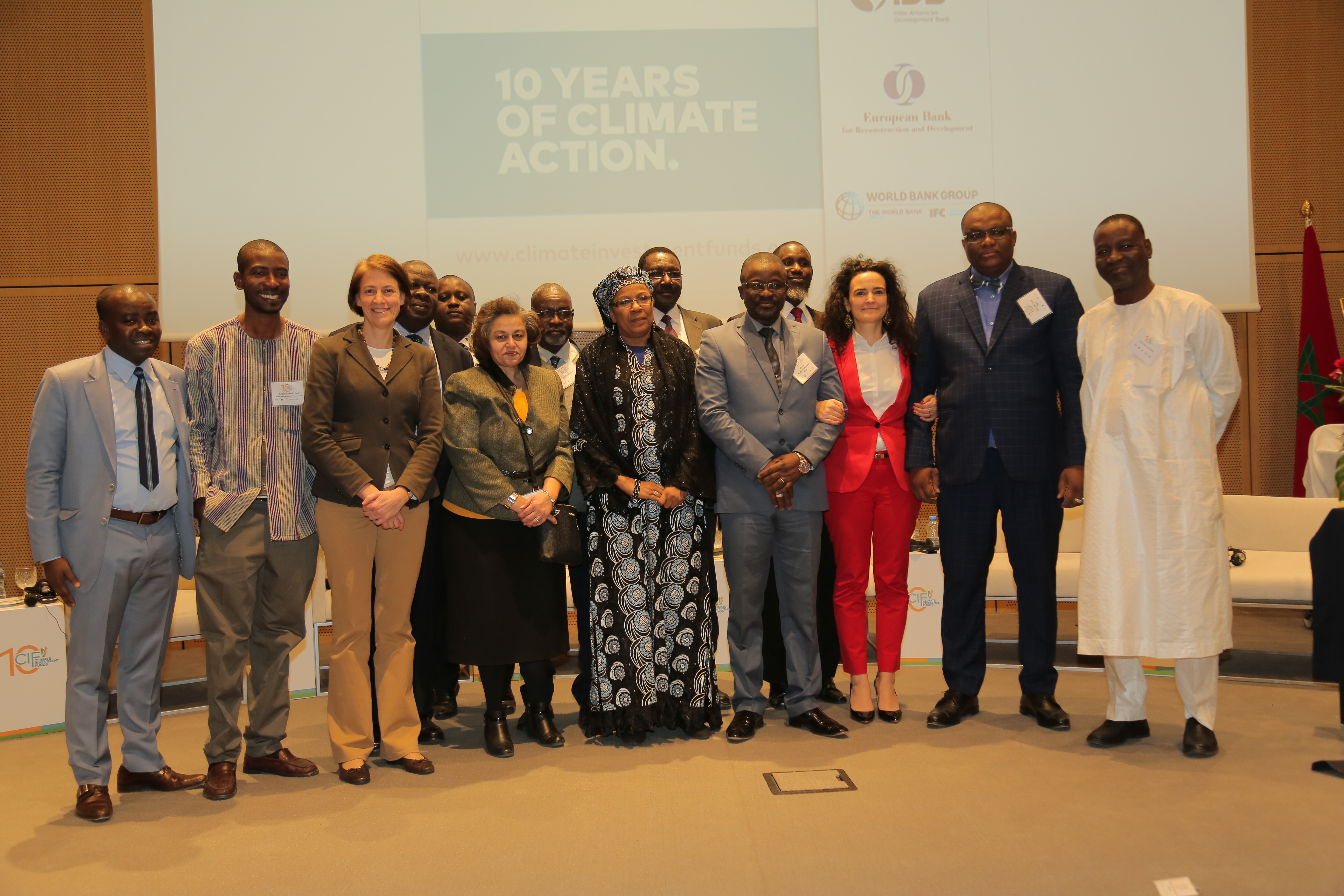
COUNTRIES URGE RECAPITALIZATION OF THE CLIMATE INVESTMENT FUNDS


On the eve of the 2019 Spring Meetings of the World Bank Group and the International Monetary Fund, more than 30 developing countries called on the international community to recapitalize the Climate Investment Funds (CIF) in response to worsening consequences of climate change and sweeping finance gaps for low-carbon development.

In a joint statement, ministers representing nations on the frontlines of climate change sent the clearest signal yet that CIF is, and should remain, a central multilateral institution in the global climate finance architecture. Addressing mass migration, increased poverty rates, and other climate impacts, they declared, requires "significant investment" from CIF and its partners in areas spanning resilience, energy transition and access, land use management, and sustainable cities.

Mobilizing finance for climate action is a core development challenge and a multitrillion-dollar economic opportunity. Closing the expansive gap in climate finance is vital to supporting developing countries in meeting their sustainable development objectives, avoiding global climate catastrophe, and seizing the rewards of a new climate economy. It is also a priority area of UN Secretary-General António Guterres' Climate Summit in September of this year.

"Now is the time—not tomorrow, not next week—to direct all our energy, all our ingenuity, and all our resources toward reining in this crisis. With their statement today, developing countries acknowledged unequivocally that CIF is an essential means to this end," said CIF Head Mafalda Duarte.

Honduras, Niger, Vietnam, Tajikistan, and other signatories praised CIF's tried-and-tested approach to climate finance. They stressed the need to harness its comparative advantages and those of complementary multilateral climate funds, including the Green Climate Fund, to drive low-carbon and resilient development where it is needed most: in low and middle-income countries.

Now marking over a decade of climate action, CIF financing is unlocking over $55 billion in climate change-related investments across 72 countries. These efforts have realized hundreds of transformational programs and projects that would have been impossible without CIF's below-market rates and patient, risk-absorbing capital. Worldwide, CIF-funded initiatives are supporting 26.5 gigawatts in clean power capacity, improved energy access for 8.5 million people and over 300,000 businesses, strengthened climate resilience for 45 million people and 44,000 businesses, and 36 million hectares of more sustainable forests.

These efforts range from developing new financial tools for scaling energy efficiency in Turkey, to ensuring climate-resilient livelihoods in Niger, to building the world's largest concentrated solar power plant in Morocco. CIF partnerships are helping clean energy industries in Chile, India, Nepal, and Ghana, creating jobs and hope for enterprising young people across emerging economies. In addition, the lessons generated from more than 300 CIF-supported ventures are continually setting the standard for stakeholder engagement, governance, transparency, and accountability for similar financing institutions in the public and private sectors.

The climate decisions we make now will have lasting implications for our generation and those to come. We face a closing window of opportunity to enact the unprecedented transitions in land use, industry, energy, transport, and urban development needed to build a more resilient world.

With adequate financing, CIF can continue pushing the frontier of climate finance around the world, serving as a partner of choice for driving change in markets, technologies, institutions, and behaviors. CIF stands ready to continue contributing to a cleaner, more prosperous, and more sustainable future for all.
 

About CIF
Marking more than ten years of climate action, the $8.3 billion Climate Investment Funds is the largest multilateral climate financing instrument in the world. CIF provides developing countries financing for climate-resilient and low-carbon development. These grants, concessional loans, risk mitigation instruments, and equity leverage significant financing from the private sector, multilateral development banks (MDBs), and other sources. Five MDBs—the African Development Bank (AfDB), Asian Development Bank (ADB), European Bank for Reconstruction and Development (EBRD), Inter-American Development Bank (IDB), and World Bank Group (WBG)—implement CIF-funded projects and programs.

Sunday, 7 April 2019

PDP Accuses Amaechi, Malami of Plots To Cause Constitutional Crisis in Rivers State


April 7, 2019

Press Conference

PDP Accuses Amaechi, Malami of Plots To Cause Constitutional Crisis in Rivers State 

Gentlemen of the press, we have called you up this afternoon to alert Nigerians of a fresh plot by desperate leaders of the All Progressives Congress (APC), working with the Minister of Justice and Attorney General of the Federation (AGF), Abubakar Malami SAN, to cause constitutional crisis in Rivers State.

The PDP has been informed of how these desperate APC figures and their agents have been mounting pressure on the Acting Chief Justice of Nigeria (CJN), Justice Tanko Mohammed, to reverse the February 12, 2019 final judgment of the Supreme Court, which upheld the verdict of the trial court that lawfully excluded the APC from participating in the National Assembly, Governorship and State Assembly Elections in Rivers State, having nullified the party's flawed primaries in the state. 

Nigerians can recall that in nullifying the APC primaries and barring it from fielding any candidates in Rivers State for the 2019 general elections, the High Court held, and rightly too, that APCs' primaries in the state were invalid and cannot be considered. 

Acting upon the final judgment of the Supreme Court, the Independent National Electoral Commission (INEC), on February 23, 2019 held the Presidential/National Assembly elections and on March 9, 2019 conducted the governorship and State House of Assembly elections in Rivers state, in which the APC, having been lawfully excluded, did not participate. 

Nigerians can also recall how the APC, having been frustrated by its lawful exclusion, used compromised security agents to violently disrupt the smooth conduct of elections in Rivers State.

In the course of the elections, the APC however adopted the governorship candidate of the African Action Congress (AAC), bankrolled his election and made compromised security agents and thugs available to him, with the view to using them to muscle votes.

In spite of these conspiracies by the APC, the will of the people of Rivers state prevailed, as they braved the odds, resisted all machinations and voted overwhelmingly for the PDP and all its candidates.

The spontaneous jubilation in Rivers State and across the country, in addition to the general outpouring of goodwill to Governor Wike and other candidates of the PDP on their victory, clearly demonstrates the PDP popularity and acceptance not only by the people of Rivers, but also by lovers of democracy all over world.

However, not done with the desperation to cause confusion and crisis in Rivers state, the leader of the APC in the state; Minister of Transport, Rotimi Amaechi, has engaged in fresh conspiracies to subvert the will of the people as expressed at the polls.

The PDP has information of how Rotimi Amaechi has been going around in Rivers State, giving assurances that he has the ears of the Supreme Court under the leadership of Acting CJN, Justice Tanko Mohammed, and that the Supreme Court will reverse its final judgment on APC Primaries and create the way for fresh elections in Rivers State, in which the APC will be allowed to participate. 

Rotimi Amaechi goes about boasting that the apex court in the land, the Supreme Court, will reverse itself and declare for fresh conduct of all the elections in Rivers State.

This is completely reprehensible and unthinkable in our democratic process.

If this is allowed to occur, it will also amount to the highest travesty of justice, apart from being a direct abuse of court process. The Supreme Court is the highest temple of justice in our country and as such must protect itself from all forms of manipulative tendencies of the APC.

The jubilation across the country that trailed its February 12 final judgment is a testament of justice and a reinforcement of the confidence Nigerians have in the Supreme Court, which must not be destroyed by the APC. 

The PDP therefore urges the Acting CJN not to allow his office to be used by desperate power mongers in the APC to cause anarchy and perpetrate more violence in Rivers state.

The people of Rivers state have experienced so much crisis, bloodletting, harassment and intimidations from the APC in its desperation to forcefully take over the state. 

The people have spoken loudly on their choice of PDP and all its candidates. They should be allowed to move ahead with their leaders and no institution of government should lend itself as an instrument in the hands of oppressive forces seeking to undermine our democracy and subjugate our citizenry.

Signed:

Kola Ologbondiyan
National Publicity Secretary

Thursday, 4 April 2019

No More Subsidy


The International Monetary Fund (IMF) has reiterated its call for the Federal Government to end fuel subsidies, saying that this, coupled with efforts to strengthen social safety nets, "would help reduce the poverty gap and free up additional fiscal space."


In a press release issued yesterday on the conclusion of the IMF Article IV Consultation with Nigeria, the Fund also stated that it was imperative for the Federal Government to secure oil revenues through, "reforms of state owned enterprises and measures to improve the governance of the oil sector."


While noting that the Nigerian economy is recover ing, the Fund, however, urged the government to intensify its reform efforts, saying that: "Under current policies, the outlook remains muted."


The IMF stated: "Executive Directors welcomed Nigeria's ongoing economic recovery, accompanied by reduced inflation and strengthened reserve buffers. They noted, however, that the medium-term outlook remains muted, with risks tilted to the downside. In addition, long standing structural and policy challenges need to be tackled more decisively to reduce vulnerabilities, raise per capitagrowth, and bring down poverty. Directors, therefore, urged the authorities to redouble their reform efforts, and supported their intention to accelerateimplementation of their Economic Recovery and Growth Plan.


Continuing, it said: "Bold reform efforts, following the election cycle, could boost confidence and investments, especially given relatively conservative baseline projections. On the downside, additional delays in reform implementation, a persistent fall in oil prices, reduced oil production, increased security tensions, or tighter global financial market conditions could undermine growth, provoke a market sell-off, and put additional pressure on reserves and/or theexchange rate."


According to the statement, the IMF also said that despite the decline in Non-Performing Loans (NPLs) and improved prudential banking ratios, "undercapitalized banks continue to weigh on financial sector performance," adding that the authorities should create a credible timeline to recapitalise weak banks in the country and also for phasing out the Asset ManagementCorporation of Nigeria(AMCON).


As the statement puts it: "Directors welcomed the decline in non-performing loans and the improved prudential banking ratios, but noted that restructured loans and undercapitalized banks continue to weigh on financial sector performance.


"They suggested strengthening capital buffers and risk-based supervision, conducting an asset quality review, avoiding regulatory forbearance, and revamping the banking resolution framework. Directors also recommended establishing a credible time bound recapitalization plan for weak banks and a timeline for phasing out the state backed asset management company, AMCON."


Furthermore, the IMF Directors, according to the statement, welcomed the Federal Government's tax reform plan to increase non-oil revenue, including through tax policy and administration measures.


"They stressed the importance of strengthening domestic revenue mobilization, including through additional excises, a comprehensive VAT reform,   and elimination of tax incentives.
"Directors highlighted the importance of shifting theexpenditure mix toward priority areas. They welcomed, in thiscontext, the significant increase in public investment, but underlined the need for greater investment efficiency," the statement said.
Similarly, the IMF Directors expressed support for restrictive monetary policy, saying it is appropriate for the Nigerian economy at this time.

"With inflation still above the Central Bank's target, directors generally considered that a tight monetary policy stance is appropriate," they stated.
They urged the Central Bank of Nigeria (CBN) to enhance transparency and communication and to improve the monetary policy framework, including using more of traditional methods such as raising the Monetary Policy Rate (MPR) or Cash ReserveRequirements (CRR).

They, however, advised the CBN to end its direct intervention in the economy and focus on its price stability mandate.
It would be recalled that during her visit to Nigeria in 2016, the Managing Director of the IMF, Christine Lagarde, had asked the Federal Government to take very tough economic decisions, including removal of fuel subsidy and increasing VAT.


Stressing the need to remove fuel subsidy, Lagarde said at the time that: "The move by the government to remove the fuel subsidy is good. Those people who need the subsidy can receive cash transfer. Fuel subsidies are hard to defend. Subsidies are no longer good. But I hear that it will hurt the poor. Forty per cent of fuel subsidies in rich countries go to rich families. The people do not really need the subsidy. Look at the number of people who stay at stations trying to buy fuel